Wheel coating: heat, brake dust and road chemicals
Wheels are the dirtiest and hottest surface on a car. Brake dust bakes onto them, road chemicals attack the finish, and in winter ice builds up on the inner side. A paint coating is not made for this; a wheel coating is.
What wheels have to withstand
- Heat. Braking heats the wheel, especially near the hub and the inner barrel.
- Brake dust. Hot metal particles stick to the surface and are hard to remove without aggressive cleaners.
- Chemicals and salt. Road reagents and strong wheel cleaners wear down the finish and speed up corrosion.
What a dedicated wheel coating changes
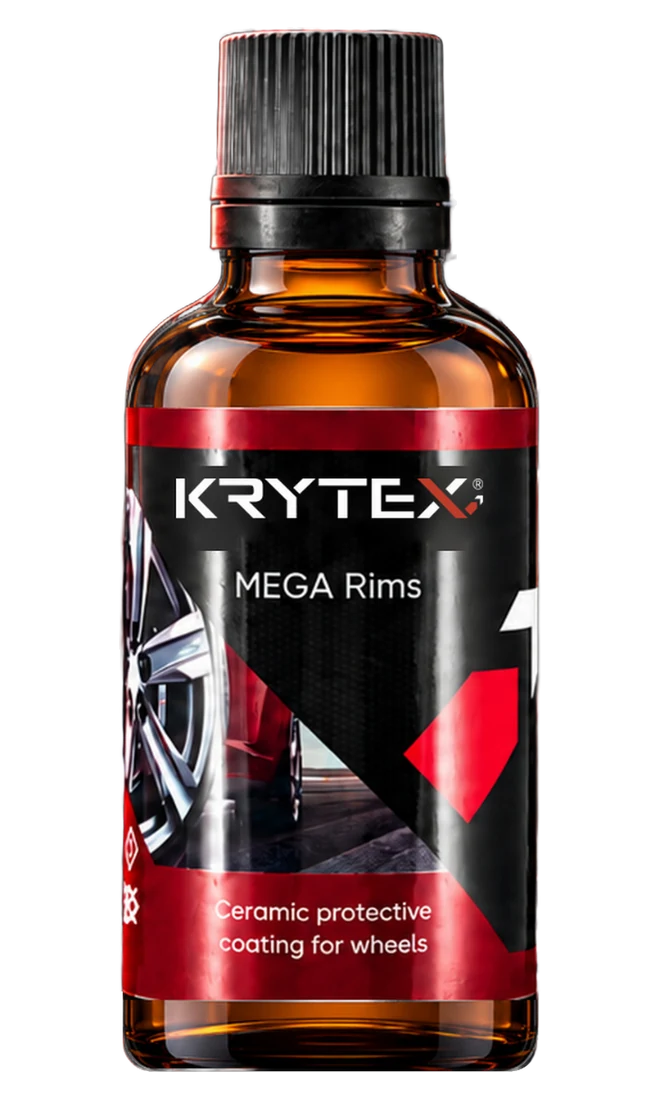
KRYTEX MEGA RIMS is a ceramic coating for alloy wheels, heat resistant from −40 to +320 °C. It forms a layer of 80–90 nm with a 118.5° contact angle and is rated for pH 1–14 and aliphatic and aromatic solvents. In practice:
- brake dust is easier to remove and dirt builds up less;
- less ice builds up on the inner side of the wheels;
- the risk of corrosion forming and spreading is lower;
- painted wheels get more gloss, depth and color.
Protection lasts up to 12 months. Consumption is 2–4 ml/m² — higher than on paint because of the complex surface.
How to apply
- Two-phase wash; remove tar, oil and iron fallout, then clay the wheels. Polishing is recommended.
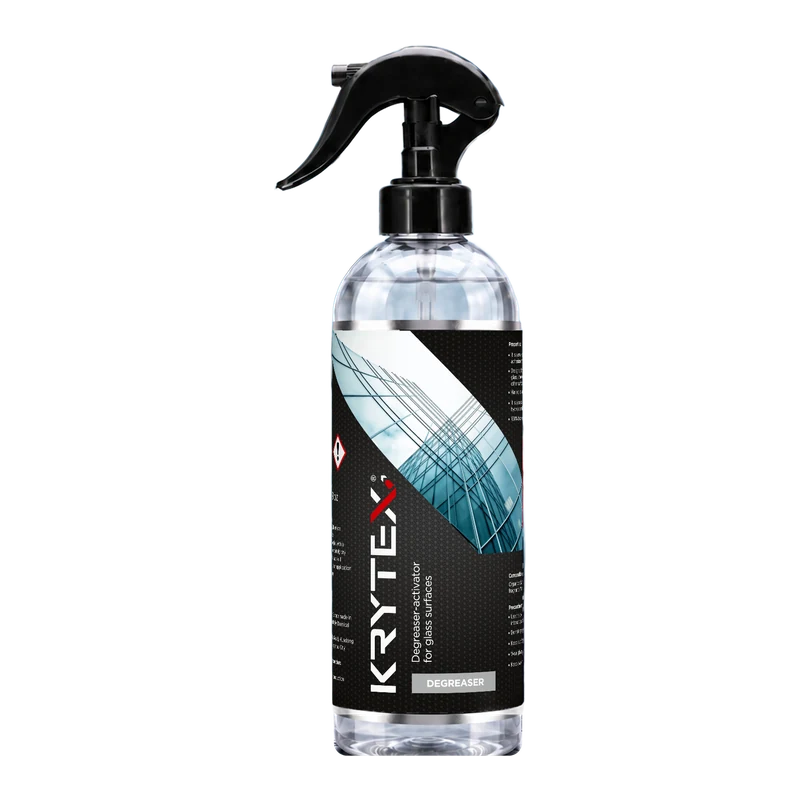
- Degrease with KRYTEX DEGREASER.
- Load the applicator with 10–15 drops and work section by section in a cross-hatch pattern. On complex spoke designs use the cloth alone.
- When the product starts beading (10–30 s), buff with a clean dry microfiber.
- Apply a second layer no more than 10 minutes after the first.
- Cure at least 8 hours before delivery. Work at 15–25 °C and no more than 60% humidity.
The best moment to coat wheels is when they are off the car — for a tyre change or a full detail — so the inner barrel can be treated too.
For studios
A wheel coating is a natural add-on to a paint coating package and a good reason for clients to come back each season. Ask for terms on MEGA RIMS and the rest of the KRYTEX range.